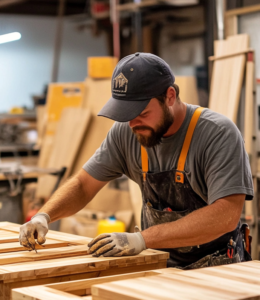

Did you know that over 60% of DIY enthusiasts prefer building their own furniture to save costs and add a personal touch to their homes? I’ve always been passionate about creating functional and stylish pieces, and this project is no exception. Crafting a bedside table has been one of my most rewarding experiences, and I’m excited to share these woodworking nightstand plans with you.
This side table design is modern, practical, and perfect for anyone looking to enhance their bedroom’s look. Whether you’re a beginner or an experienced builder, the step-by-step instructions make it easy to follow. From the initial blueprint to the final finishing touches, every detail is covered to ensure your project turns out beautifully.
What I love most about this bedside table is its sleek design and functionality. It includes a drawer for storage and a clean, minimalist aesthetic that fits any decor. Plus, the materials are affordable, and the project can be completed in just a few hours. Ready to get started? Let’s dive into this fun and rewarding DIY journey together!

Key Takeaways
- Building your own furniture can save money and add a personal touch to your home.
- This project is beginner-friendly with detailed, easy-to-follow instructions.
- The design features a sleek, modern look with functional storage.
- Affordable materials make this project accessible for all budgets.
- Completing the project takes just a few hours, making it a quick and rewarding DIY task.
Introduction: My Journey into Nightstand Projects
Creating my first side table was a turning point in my DIY adventures. It all started with a need for a functional yet stylish piece to complement my bedroom. I wanted something that reflected my personality and fit perfectly with my decor. That’s when I decided to build my own bedside table and price the woodworking project correctly to earn a profit.
Personal Inspiration
My inspiration came from everyday design. I noticed how small details in furniture could transform a space. I began sketching ideas, imagining a sleek and modern side table with clean lines. The challenge of turning those sketches into reality excited me. It wasn’t just about building furniture; it was about creating something uniquely mine.
Starting this project wasn’t without its hurdles. I faced challenges like choosing the right materials and mastering new techniques. But each step brought a sense of accomplishment. Over time, crafting furniture evolved into a rewarding hobby that I now cherish.
Setting the Scene
Planning is crucial for any DIY project. Before I began, I envisioned the final product and mapped out every detail. This approach helped me stay organized and avoid costly mistakes. I also drew inspiration from modern design trends, ensuring my bedside table would be both functional and stylish.
Here’s a quick breakdown of the materials I used for my first project:
| Material | Quantity |
|---|---|
| Wood Boards (2”x2”x8’) | 7 |
| Plywood Sheets (3/4″ x 4’ x 8’) | 1 |
| Plywood Sheets (1/4″ x 2’ x 4’) | 1 |
| Drawer Slides | 2 |
| Pocket Hole Screws (2-1/2”) | 96 |
| Pocket Hole Screws (1-1/4”) | 132 |
| Brad Nails (1-1/4”) | 1 box |
This project taught me the importance of patience and precision. It also showed me how rewarding it is to create something with my own hands. If you’re considering a similar journey, I encourage you to take the leap. The satisfaction of completing your own bedside table is truly unmatched.
Why I Love DIY Nightstand Projects
There’s something incredibly fulfilling about turning a simple idea into a tangible piece of furniture. For me, building my own nightstand has always been about more than just saving money—it’s about creating something that reflects my style and meets my needs perfectly.
Designing a custom piece allows me to blend functionality with aesthetics. This is what I tried to do with my pallet wood project. A well-crafted drawer not only adds storage but also enhances the overall design. It’s these small details that make a room feel complete and uniquely mine.

Following a detailed plan is one of the most rewarding parts of the process. It’s like solving a puzzle, where every piece fits perfectly to create something beautiful. Even the simplest projects can transform a space, adding both charm and practicality.
“The joy of DIY lies in the journey—the challenges, the creativity, and the satisfaction of seeing your vision come to life.”
What I love most is the personal satisfaction of building something piece by piece. It’s a reminder that with patience and effort, you can create something truly special. Whether you’re a beginner or an experienced builder, adapting plans to suit your taste is a great way to embrace creativity.
So, if you’ve ever considered a DIY project, I encourage you to take the leap. The process is as rewarding as the result, and the pride of creating your own nightstand is unmatched.
Exploring Woodworking Nightstand Plans
Building a piece of furniture from scratch is a journey that combines creativity and precision. A well-thought-out blueprint is the backbone of any successful project. It ensures every component fits perfectly and the final product meets your expectations.
Understanding the Blueprint
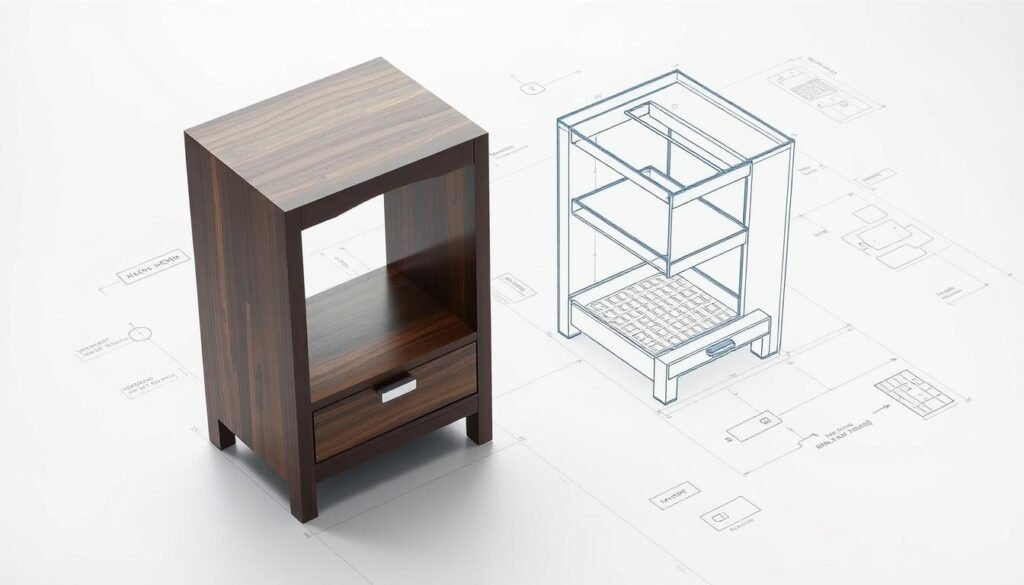
Every DIY project starts with a clear plan. For this side table, the blueprint outlines the dimensions, materials, and assembly steps. It’s essential to study the plan thoroughly before starting. This helps avoid mistakes and ensures a smooth building process.
One key aspect is the use of pocket holes for assembly. These hidden joints provide strength and a clean finish. Drilling them accurately is crucial for a sturdy drawer and overall structure. The blueprint also highlights the importance of precise measurements for each piece. You should take note to do this with all of your simple woodworking projects.
From Concept to Completion
Transitioning from concept to completion involves careful execution. Start by cutting all materials to the specified dimensions. Then, follow the blueprint to assemble the frame, ensuring each joint is secure. The side table design emphasizes clean lines and functionality.
Here’s a quick overview of the assembly steps:
| Step | Description |
|---|---|
| 1 | Cut wood pieces to size |
| 2 | Drill pocket holes for joints |
| 3 | Assemble the frame |
| 4 | Install the drawer slides |
| 5 | Attach the drawer front |
| 6 | Sand and finish the piece |
Adapting the plan to your space and style is encouraged. Whether you prefer a minimalist look or added storage, the blueprint serves as a flexible guide. With patience and attention to detail, you’ll create a modern nightstand that’s both functional and stylish.
Tools and Materials for a Successful Build
Having the right tools and materials is the foundation of any successful DIY project. Whether you’re building a side table or a custom drawer, precision and preparation are key. In this section, I’ll walk you through the essentials you’ll need to bring your plan to life.
Must-Have Tools
To ensure accuracy and efficiency, start with the right tools. A Kreg® Pocket-Hole Jig 720PRO is a game-changer for creating strong, hidden joints. A miter saw or table saw is essential for precise cuts, while a cordless drill makes assembly a breeze. Don’t forget clamps for alignment and sanding tools for a smooth finish.
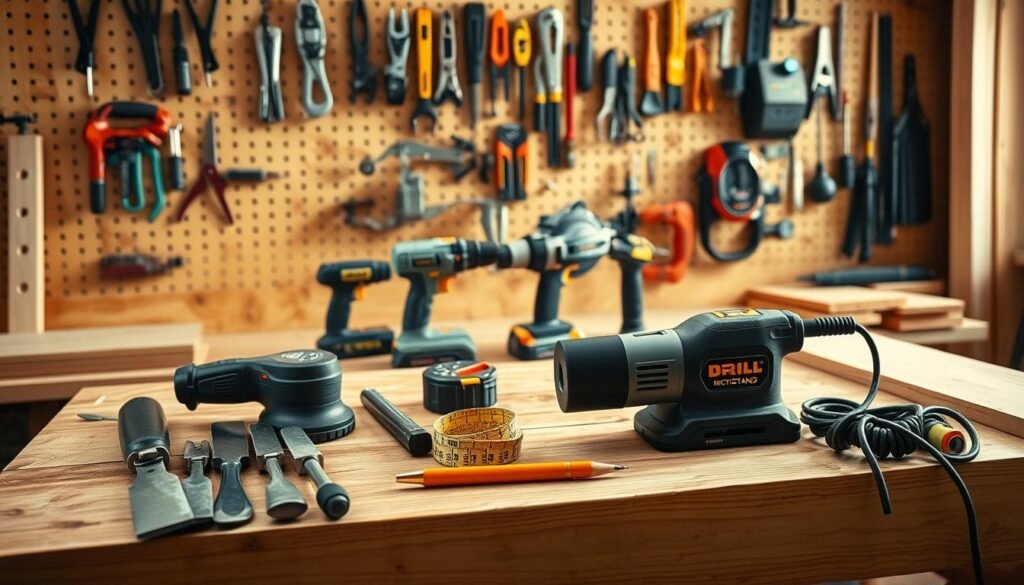
Other tools like a jigsaw for intricate designs and a reliable tape measure for accurate sizing are also crucial. Safety gear, such as goggles and a respirator, should never be overlooked. These tools not only make the process easier but also ensure your project turns out professional and polished.
Detailed Material List
Materials are just as important as tools. For this project, you’ll need 7 boards of 2”x2”x8’ and 2 sheets of plywood (3/4″ x 4’ x 8’ and 1/4″ x 2’ x 4’). These form the backbone of your table. Additionally, you’ll require 2 sets of 12″ drawer slides, 228 pocket hole screws, and a box of 1-1/4” brad nails.
Here’s a quick breakdown of the materials:
- Wood Boards (2”x2”x8’): 7
- Plywood Sheets (3/4″ x 4’ x 8’): 1
- Plywood Sheets (1/4″ x 2’ x 4’): 1
- Drawer Slides (12”): 2
- Pocket Hole Screws (2-1/2”): 96
- Pocket Hole Screws (1-1/4”): 132
- Brad Nails (1-1/4”): 1 box
Hardware & Supplies Overview
Choosing the right hardware can make or break your project. High-quality cabinet connectors and woodworking glue ensure durability, while sandpaper (120 and 220 grit) guarantees a flawless finish. A well-prepared workspace is equally important—keep your tools organized and your area clean to avoid mistakes.
By investing in the right tools and materials, you’ll set yourself up for success. Whether you’re a beginner or an experienced builder, this detailed guide ensures your project will be both functional and stylish.
Step-by-Step Construction Process
Building a functional and stylish piece of furniture starts with a solid plan and attention to detail. This guide walks you through each step, from constructing the side frames to applying the final finish. Whether you’re a beginner or an experienced builder, these instructions ensure a smooth and rewarding process.

Building the Side Frames
Start by cutting the 2×2 boards to the specified lengths. For the legs, cut four pieces at 29 1/2 inches. Next, prepare the crosspieces—four at 12 inches and four at 20 inches. Use a pocket hole jig to drill holes for secure joints.
Assemble the side frames by attaching the crosspieces to the legs. Ensure everything is square before tightening the screws. This creates a sturdy foundation for your bedside table.
Assembling the Drawer Box
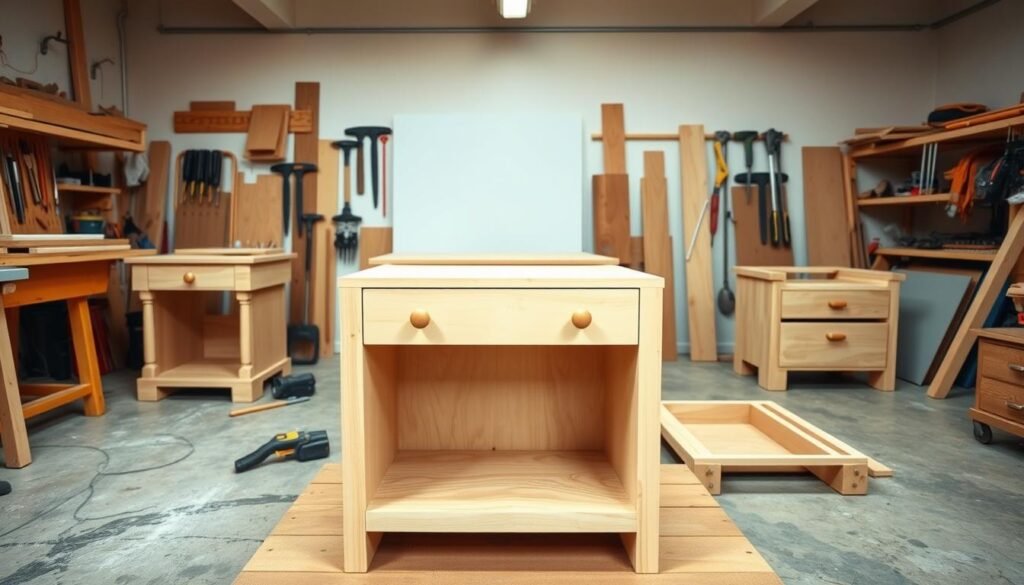
Cut the plywood pieces for the drawer sides, front, back, and base. Use edge banding for a clean finish. Assemble the box using pocket hole screws, ensuring all corners are square.
Install the drawer slides 1 1/4 inches from the front edge of the frame. Attach the slides to the box and test the movement for smooth operation. This step ensures your drawer is both functional and durable.
Finishing Techniques
Sand the entire piece with 120-grit sandpaper, followed by 220-grit for a smooth surface. Wipe away dust before applying your chosen finish—stain or paint. Allow it to dry completely before handling.
Finally, attach the drawer front and hardware. Take your time to align everything perfectly for a polished look. These finishing touches transform your project into a stunning bedside table.
| Step | Description |
|---|---|
| 1 | Cut wood pieces to size |
| 2 | Drill pocket holes for joints |
| 3 | Assemble the side frames |
| 4 | Build the drawer box |
| 5 | Install drawer slides |
| 6 | Sand and finish the piece |
Throughout the process, I learned the importance of patience and precision. Taking the time to measure twice and cut once ensures a professional result. Enjoy each step—it’s all part of the rewarding journey of creating your own bedside table.
Modern Nightstand Design Ideas
Modern design is all about simplicity and functionality, and that’s exactly what I aimed for with this project. A bedside table should not only be practical but also enhance the overall look of your space. Let’s explore some design trends that can elevate your side table to the next level.

Clean Architectural Lines
One of the hallmarks of a modern nightstand is its clean, architectural lines. These designs focus on minimalism, avoiding unnecessary details that can clutter the look. Straight edges and smooth surfaces create a sleek and contemporary aesthetic.
I found that using materials like pine boards or hardwood plywood helps achieve this clean finish. The simplicity of the design allows it to blend seamlessly with various room decors, from Scandinavian to industrial styles.
Sleek Drawer Features
A well-designed drawer can be both stylish and functional. For this project, I opted for soft-close slides to ensure smooth operation. The drawer front features inset panels, adding dimension without overwhelming the design.
Here are a few ways to personalize your drawer:
- Use contrasting colors or stains for a bold statement.
- Add texture with materials like leather or metal handles.
- Incorporate hidden compartments for extra storage.
These small adjustments can make a big difference, turning a basic bedside table into a standout piece.
By focusing on clean lines and sleek features, you can create a modern nightstand that’s both functional and visually appealing. Whether you’re building from scratch or customizing an existing design, these ideas will help you achieve a contemporary look that fits your style.
Creative Customization Options for a Personal Touch
Adding a personal touch to your furniture project can transform it from ordinary to extraordinary. Customizing your build allows you to create a piece that truly reflects your style and fits seamlessly into your space. Whether you’re working on a table or a drawer, the possibilities are endless when it comes to making it uniquely yours.
One of my favorite ways to personalize a project is through unique finishing techniques. Experimenting with stains, paints, and decorative accents can completely change the look of your piece. For example, I once used a two-tone stain to highlight the grain of the wood, giving my side table a rustic yet modern feel.
Unique Finishing Tips
Finishing is where your creativity can shine. Here are some ideas to inspire your next project:
- Use chalk paint for a matte, vintage finish.
- Add texture with a paint wash or raised stencil designs.
- Incorporate metallic accents for a touch of elegance.
Hardware placement is another area where small tweaks can make a big difference. Swapping out standard knobs for unique handles or adjusting their position can elevate the design. I’ve found that mixing classic and modern elements creates a balanced and timeless look.
“The joy of customization lies in the details—each choice reflects your personality and vision.”
Don’t be afraid to experiment. Whether it’s adding hidden compartments or using unconventional materials, these subtle changes can transform your project. The key is to let your creativity guide you and make the piece truly yours.
Troubleshooting Common Challenges in Your Nightstand Build
Even the most experienced builders can run into unexpected challenges during a project. Building a nightstand is no exception. From measurement errors to assembly mishaps, it’s easy to feel stuck. But with the right approach, you can navigate these hurdles and end up with a polished piece.
Identifying Common Mistakes
One of the most frequent issues I’ve encountered is incorrect measurements. A slight miscalculation can throw off the entire plan. For example, if the drawer slides aren’t aligned properly, the box won’t fit smoothly. Always double-check your cuts before assembly.
Another common mistake is rushing the finishing process. Skipping sanding or applying uneven coats can ruin the look of your table. Take your time to ensure a smooth, professional finish.

Expert Advice from My Experience
When I first started building, I struggled with the drawer assembly. The box would often wobble or get stuck. I learned that using high-quality slides and ensuring precise alignment makes all the difference. Here’s a quick tip: leave a ⅛” gap around the drawer front for smooth operation.
Another lesson I’ve learned is to revisit the plan frequently. If something doesn’t feel right, recalibrate before proceeding. This approach has saved me from costly errors and ensured the structural integrity of my projects.
“The key to troubleshooting is patience—take a step back, assess the issue, and adjust as needed.”
By staying meticulous and attentive, you can avoid common pitfalls and create a nightstand that’s both functional and stylish. Remember, every challenge is an opportunity to learn and improve your skills.
Build your Woodworking Nightstand Today
Building a bedside table has been a rewarding journey, blending creativity with practicality. From drafting the initial plan to assembling the drawer, every step brought a sense of accomplishment. The process taught me the value of patience and precision, ensuring the final piece was both functional and stylish.
Following a detailed plan made the project manageable, even for a beginner. The satisfaction of seeing my vision come to life was unmatched. I loved adding personal touches, like the sleek finish and smooth-operating drawer, which made the table uniquely mine.
If you’re considering a DIY project, I encourage you to take the leap. Start with a clear plan, take your time, and enjoy the process. The end result will not only enhance your space but also fill you with pride. Happy building!
FAQ
What inspired me to start building my own nightstand?
I wanted a modern bedside table that matched my style. Store-bought options didn’t quite fit, so I decided to create something unique myself.
What tools are essential for building a nightstand?
I found a circular saw, drill, and sander to be must-haves. These tools helped me cut, assemble, and finish my project smoothly.
How do I choose the right materials for my nightstand?
I recommend using sturdy wood like birch or oak for durability. For a sleek look, I paired it with modern hardware from brands like IKEA or Home Depot.
What’s the most challenging part of building a nightstand?
For me, assembling the drawer box was tricky. Taking precise measurements and ensuring smooth sliding took patience, but it was worth it.
Can I customize my nightstand to match my room’s decor?
Absolutely! I added unique finishes like matte paint or wood stain to match my bedroom’s aesthetic. You can also experiment with drawer handles or legs for a personal touch.
How do I fix common mistakes during the build?
If measurements are off, I suggest double-checking before cutting. For uneven surfaces, sanding and adjusting the alignment usually solves the issue.
What’s the best way to add a modern look to my nightstand?
I focused on clean lines and sleek drawer features. Using minimalist hardware and a neutral color palette gave my piece a contemporary vibe.