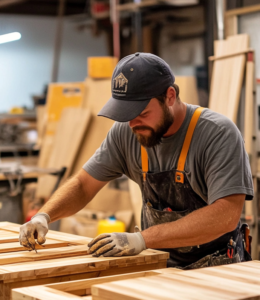

Did you know that 75% of small businesses run from home are likely not set up as legitimate businesses? This surprising fact highlights the challenges many face when turning a passion into profit. For years, I struggled with figuring out how to price woodworking projects correctly.
Starting as a hobbyist, I used to double the material cost and call it a day. But as my skills grew, so did the complexity of my projects. I quickly realized this approach wasn’t sustainable. Over time, I developed a simple yet effective formula: materials cost plus hourly labor. This method ensures I cover expenses while earning a fair profit.
Pricing isn’t just about numbers; it’s about valuing your time and effort. Whether you’re crafting a custom table or building a set of chairs, understanding the true cost of your work is essential. In this article, I’ll share my journey and the steps I took to create a pricing strategy that works for my business.

Key Takeaways
- Many home-based businesses lack proper pricing strategies.
- Doubling material cost is often insufficient for profitability.
- A simple formula: materials cost plus hourly labor.
- Understanding overhead expenses is crucial.
- Valuing your time ensures fair compensation.
Understanding the True Cost of Your Woodworking Projects
Accurately estimating costs is the backbone of any successful venture. It doesn’t matter if you are working on woodworking pallet ideas, or something even more unique. Doing an ROI calculation is always important.
When I first started, I often underestimated expenses, leading to tight margins. Over time, I learned that the true cost of a project involves more than just material expenses. It includes waste, overhead, and even the time spent managing the shop.
Assessing Material Costs and Waste
Material costs can vary widely depending on the type of wood and market conditions. I use two methods to calculate these expenses. The first is a quick estimate using board feet with a 20% buffer for waste. The second involves creating a detailed cut list to minimize excess wood.
Adding a buffer is essential. Mistakes happen, and some pieces may not meet quality standards. By planning for waste, I ensure I have enough material without overspending. A well-prepared cut list also helps reduce errors and improve the overall quality of the work.
Factoring in Overhead and Administrative Expenses
Overhead costs are often overlooked but play a significant role in pricing. These include electricity, tools, and even the time spent on non-building tasks like marketing or cleaning. I add an extra 10% to material costs to cover these miscellaneous expenses.
Understanding your shop’s cost structure is critical. For example, if I spend $300 monthly on operating costs and produce 40 items, each project carries an additional $7.50 in overhead. This step ensures I’m not losing money on hidden expenses.
By accurately assessing material costs and factoring in overhead, I create a sustainable pricing strategy. This approach not only covers expenses but also ensures fair compensation for my time and effort.
Mastering how to price woodworking projects for Profit
Setting the right hourly rate is the foundation of profitability in any craft. When I first started, I charged $50 per hour, thinking it reflected my skill level. Over time, I realized this rate didn’t account for overhead or market expectations. After feedback and research, I adjusted it to $35-$40 per hour, which better aligns with my business goals.
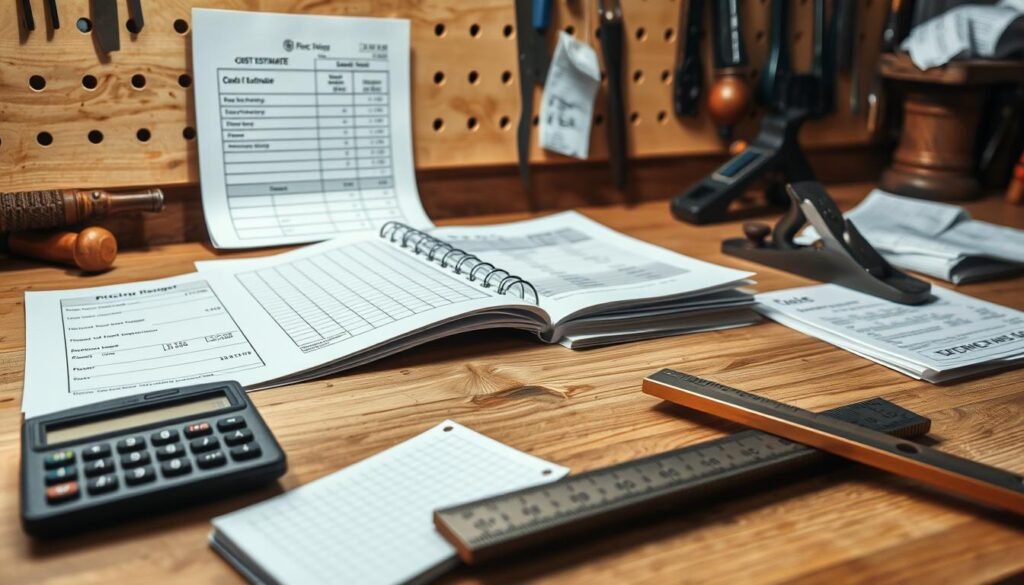
Your rate should reflect both your expertise and the market. For example, skilled woodworkers in the Midwest typically charge $60 per hour. However, your rate must also cover overhead costs like tools, electricity, and shop maintenance. Balancing these factors ensures you earn a fair profit while staying competitive.
Evaluating Your Hourly Rate and Business Goals
Aligning your rate with your goals is crucial. I started by calculating my monthly expenses and dividing them by the number of hours I planned to work. This gave me a baseline rate. From there, I considered my skill level and the value I brought to each piece.
Documenting every hour spent on a project helped me refine my estimates. I often underestimated the time required, leading to tight margins. Breaking tasks into smaller steps and tracking each one improved my accuracy. This approach also helped me communicate pricing more effectively with clients.
| Skill Level | Typical Hourly Rate |
|---|---|
| Beginner | $20-$30 |
| Intermediate | $35-$50 |
| Expert | $60+ |
Rounding up estimates and adding a “common sense adjustment” protects your bottom line. For example, if a project takes 10 hours, I might bill for 12 to account for unexpected delays. This step ensures I’m compensated fairly for my time and effort.
Understanding material cost and labor valuation is essential. By combining these factors, I create pricing that reflects the true value of my work. This approach not only covers expenses but also builds trust with clients, leading to repeat business and referrals.
Estimating Materials, Time, and Labor Accurately
Breaking down a project into smaller steps can save time and money. When I started, I often jumped straight into building without a clear plan. This led to wasted materials and missed deadlines. Over time, I learned that a structured approach is essential for accuracy. That’s what I figured out with my shoe rack wood project.

Breaking Down the Project into Manageable Tasks
Dividing a project into smaller tasks helps me estimate time and labor more effectively. For example, building a cabinet involves cutting, assembling, and finishing. By breaking it down, I can assign realistic timelines to each step.
This method also uncovers hidden costs. I once overlooked the time needed for sanding and staining, which added extra hours to the project. Now, I account for every detail, ensuring my estimates are precise.
Creating a Detailed Cut List and Workflow
A detailed cut list is a game-changer. It helps me calculate the exact amount of wood needed, reducing waste. I also add a 20% buffer for unexpected errors or quality issues.
My workflow includes checking suppliers’ websites for the latest material costs. This step ensures I’m not overpaying or underestimating expenses. For instance, I once saved $50 by comparing prices online before purchasing.

Updating the workflow as the project evolves is crucial. If I notice a task taking longer than expected, I adjust my timeline and communicate with the client. This transparency builds trust and avoids surprises.
- Divide the project into clear, manageable tasks.
- Create a detailed cut list to minimize waste.
- Check suppliers’ websites for accurate material costs.
- Update the workflow as the project progresses.
Accurate estimates start with a clear plan. By breaking down the project and preparing a detailed workflow, I ensure every part is accounted for. This approach not only saves time and money but also improves the quality of my work.
Navigating Pricing Strategies from Hobbyist to Pro
Transitioning from hobbyist to professional requires a shift in mindset and strategy. When I first started, I relied on a simple markup method—doubling the material cost. While this worked for small projects, it didn’t account for my time or overhead. As my craft grew, I realized the need for a more comprehensive approach.

Simple Markup Methods vs. Comprehensive Pricing
Simple markup methods are quick and easy. For example, multiplying the material cost by two or three gives a basic price. This works for hobbyists but falls short for professionals. It ignores labor, overhead, and market expectations.
Comprehensive pricing, on the other hand, considers every detail. I now calculate material cost, add labor based on my hourly rate, and include overhead. This ensures I cover expenses and earn a fair profit – even with medium woodworking project difficulty.
Understanding the market is crucial. For instance, pricing a cabinet involves researching competitors and knowing what clients are willing to pay. This balance ensures my work is valued while remaining competitive.
| Pricing Method | Pros | Cons |
|---|---|---|
| Simple Markup | Quick, easy to calculate | Ignores labor and overhead |
| Comprehensive | Accurate, covers all costs | Time-consuming, requires detailed tracking |
My journey from hobbyist to pro taught me the importance of fair pricing. It’s not just about covering costs; it’s about valuing my work and ensuring clients receive quality. By gradually modifying my strategy, I’ve built a sustainable business that thrives on trust and transparency.
Here are some steps I took to refine my pricing:
- Track every hour spent on a project to improve accuracy.
- Research competitors to understand the market better.
- Add a buffer for unexpected delays or errors.
- Communicate pricing clearly to avoid misunderstandings.
Fair pricing ensures I’m compensated for my effort while delivering value to my clients. It’s a win-win that has helped me grow from a hobbyist to a professional woodworker.
Utilizing Practical Formulas and Real-Life Examples
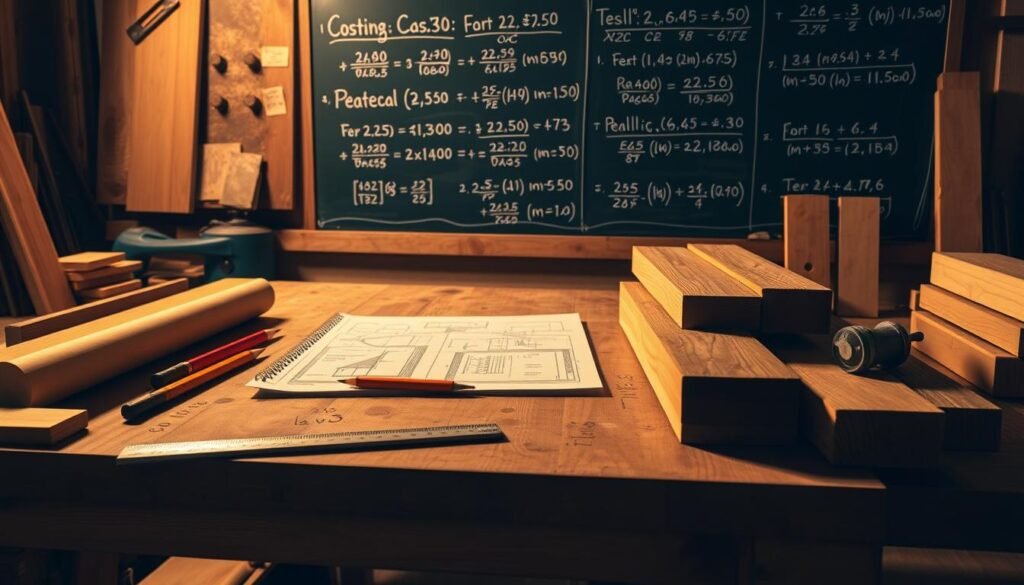
Pricing a project doesn’t have to be complicated if you use the right formula. Over the years, I’ve found that a straightforward approach saves time and ensures accuracy. My go-to method is: material cost (+10%) plus (hourly rate x project hours). This covers expenses and guarantees a fair profit.
Applying the K.I.S.S. Principle for Simplicity
The K.I.S.S. principle—Keep It Simple Stupid—has been a game-changer for me. Instead of overcomplicating calculations, I focus on the essentials. For example, I add a 20% buffer to material cost to account for waste. This step ensures I’m prepared for unexpected errors without recalculating everything.
Breaking down a project into smaller tasks also helps. I estimate the time for each step, from cutting to finishing. This method not only improves accuracy but also makes it easier to explain pricing to clients.
Adjusting Your Formula Based on Client Needs
Every project is unique, and so are client expectations. If a client requests custom options or higher-end materials, I adjust the formula accordingly. For instance, I might increase the material cost buffer or add extra hours for intricate details.
Here’s a breakdown of how I modify the base formula:
| Client Request | Adjustment |
|---|---|
| Custom Design | +10% material cost, +5 hours labor |
| High-End Materials | +20% material cost |
| Rush Delivery | +15% hourly rate |
Testing the formula with trial projects is a great way to refine it. I encourage you to experiment and see what works best for your shop. Even a minute of extra planning can lead to better results and increased profit.
By keeping it simple and adaptable, I’ve built a pricing strategy that works for me and my clients. It’s all about finding the right balance between accuracy and ease.
Price Your Woodworking Project and Profit
Pricing your piece correctly ensures long-term success. Over the years, I’ve learned that assessing material cost, breaking down tasks, and setting a fair hourly rate are essential steps. These practices not only cover expenses but also guarantee a solid profit.
Understanding both direct and overhead costs is crucial. By factoring in every detail, I’ve built a pricing strategy that works for my clients and my business. This approach has helped me evolve from a hobbyist mindset to professional practices, boosting the quality of every project.
I encourage you to experiment with these strategies. Refine your pricing models based on real-world results. Even a small adjustment can have a significant end impact on your money flow. Revisit specific sections as needed and apply the formulas with confidence.
Thank you for joining me on this journey. I’d love to hear your methods in the comments. Let’s continue to grow and succeed together!

FAQ
What’s the best way to calculate material costs for my work?
Start by listing all supplies needed, including wood, screws, and finishes. Add a buffer for waste, typically 10-15%, to ensure you’re covered. This helps avoid surprises and keeps your budget on track.
How do I factor in my hourly rate when setting prices?
Determine your desired income and divide it by the hours you plan to work annually. Add this rate to your material and overhead costs. This ensures your effort is fairly compensated.
Should I use a simple markup or a detailed pricing method?
It depends on your skill level and client base. Beginners might prefer a straightforward markup, while professionals often use comprehensive formulas that include labor, materials, and overhead.
How can I accurately estimate the time a project will take?
Break the project into smaller tasks and assign time estimates to each. Track your actual time on similar jobs to refine your estimates. This helps you avoid underestimating and losing money.
What’s the K.I.S.S. principle, and how does it apply to pricing?
K.I.S.S. stands for “Keep It Simple, Stupid.” Use it to create an easy-to-follow pricing formula that includes material costs, labor, and a profit margin. Adjust it based on client needs or market trends.
How do I handle overhead and administrative expenses in my pricing?
Add a percentage of your monthly overhead costs, like rent, utilities, and tools, to each project. This ensures these expenses are covered without eating into your profit.
What’s the best way to create a detailed cut list for a project?
Measure and list all pieces of wood needed, including dimensions and quantities. Use software like SketchUp or Excel to organize it. This saves time and reduces material waste.
How do I adjust my pricing for different clients or markets?
Research your local market and competitors. Offer tiered pricing based on quality, customization, or urgency. This flexibility helps attract a wider range of clients.